The Honest Answer, First
Yes, a US undergraduate degree is worth it for students who can access strong scholarships, choose an in-demand major such as engineering, computer science, or business, and are prepared for the F-1 visa process. For families paying full fees with little or no financial aid, the return on investment is far less certain, and it deserves a serious, numbers-based conversation before you decide.
This is exactly the conversation we have every week with parents who walk into our Chandigarh office with the same mix of excitement and worry. Some families have already taken a loan sanction letter to their bank; others are still deciding between the US, Canada, and the UK. Either way, the questions are usually the same: How much will this really cost once every hidden fee is added up? Will my child actually recover this investment? And how risky is the visa process in the current environment? This article walks through all three, using real cost ranges, a realistic visa timeline, and patterns we’ve observed across the applications we’ve personally guided, so you can make a decision based on facts rather than fear or hype.
Why This Question Comes Up So Often in Punjab and Haryana Homes
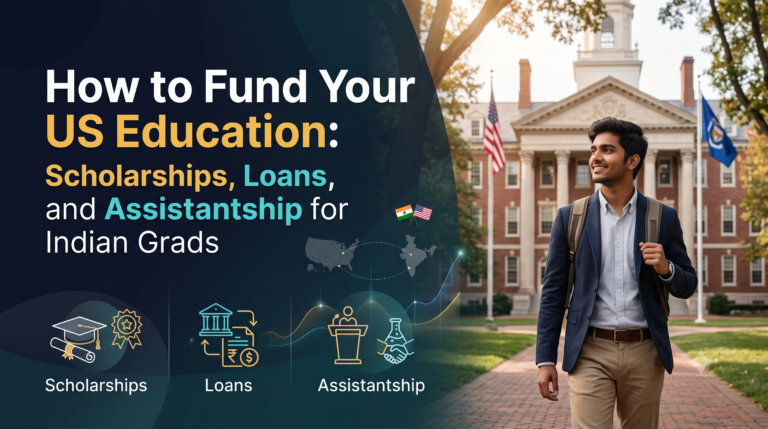
For many families in Chandigarh, Mohali, Ludhiana, Jalandhar, and across Haryana, a US degree still carries enormous social and professional weight. Relatives who moved to the US decades ago, YouTube videos of Ivy League campuses, and the promise of an American salary all add up to a powerful pull. But the US undergraduate system is also the most expensive study destination in the world, and the visa process has become noticeably stricter in the last two admission cycles.
In our experience handling 200+ US undergraduate applications and visa filings from Chandigarh, Punjab, and Haryana over the past several years, the families who end up happiest are the ones who treat this as a financial decision first and an emotional one second. The families who struggle are usually the ones who committed to a college before running the numbers.
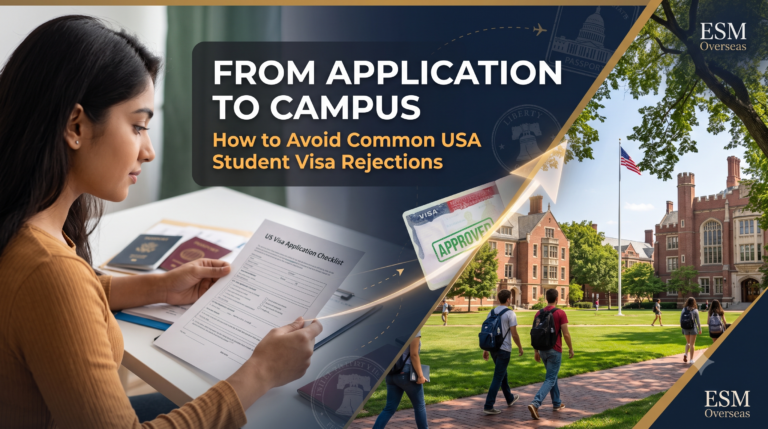
Before you go further, it helps to understand the full visa guidance process separately from the admissions process, because a student can be admitted to a great university and still face a difficult or delayed F-1 visa interview if the paperwork and financial documentation are not in order.
The Real Cost of a US Undergraduate Degree in 2026
Cost is where most Indian families underestimate the US by a wide margin. Below is a realistic, all-in breakdown for a four-year Bachelor’s degree, based on current published tuition ranges and our own experience preparing financial documentation for visa applications. We have used an exchange rate of approximately ₹96 to 1 US Dollar, which reflects rates through July 2026.
| Cost Head (Per Year) | Public University (Out-of-State) | Private University | Community College (First 2 Yrs) |
|---|---|---|---|
| Tuition & fees | USD 25,000–35,000 (₹24L–₹33.6L) | USD 45,000–60,000 (₹43.2L–₹57.6L) | USD 8,000–14,000 (₹7.7L–₹13.4L) |
| Living expenses (hostel/off-campus + food) | USD 12,000–16,000 (₹11.5L–₹15.4L) | USD 14,000–20,000 (₹13.4L–₹19.2L) | USD 10,000–13,000 (₹9.6L–₹12.5L) |
| Health insurance (mandatory) | USD 1,800–2,800 (₹1.7L–₹2.7L) | USD 2,000–3,500 (₹1.9L–₹3.4L) | USD 1,500–2,200 (₹1.4L–₹2.1L) |
| Books, travel & misc. | USD 1,500–2,500 (₹1.4L–₹2.4L) | USD 1,500–2,500 (₹1.4L–₹2.4L) | USD 1,200–2,000 (₹1.2L–₹1.9L) |
| Approx. total for full 4-year degree | USD 1,60,000–2,20,000 (₹1.54Cr–₹2.11Cr) | USD 2,50,000–3,40,000 (₹2.4Cr–₹3.26Cr) | USD 90,000–1,20,000 (2+2 route) (₹86.4L–₹1.15Cr) |
These are sticker-price ranges before any scholarship or financial aid is applied. In practice, most students who receive a merit scholarship of even 30-40% bring the total much closer to the community-college or public-university-in-state figures. Note also that F-1 visa rules require proof of funds for at least the first year of study upfront, so families need liquidity, not just eventual affordability, when it’s time to file.
Is It Actually Worth the Money? Looking at Return on Investment
This is the question parents ask us most directly, and the honest answer is: it depends heavily on the major, the university tier, and whether the student stays back to work after graduation. Below is how we typically frame ROI for families during a consultation.
When a US Undergraduate Degree Tends to Pay Off
- The student is admitted to a well-ranked program in engineering, computer science, data science, or finance, where US starting salaries (often USD 70,000–95,000, i.e. roughly ₹67L–₹91L per year) are meaningfully higher than equivalent Indian roles.
- The family secures a scholarship, grant, or assistantship covering 40% or more of total costs.
- The student is eligible for Optional Practical Training (OPT), which currently allows up to 12 months of work authorization after graduation (36 months total for STEM majors), improving the chances of recovering the investment through US earnings.
- The family can pay a large share in cash or from savings, keeping education-loan interest from eating into the long-term return.
When It’s Worth a Second Look
- The offer is from a lesser-known private university with a high sticker price and no scholarship.
- The intended major is one where US and Indian salaries are not very different (certain humanities, general business, or hospitality programs, for example).
- The full cost would require an education loan larger than what the family can comfortably service without the student securing a US job.
- The family has not budgeted for the possibility that OPT or a long-term visa (like H-1B) may not come through, in which case the student may return to India with a US degree and Indian-market salary expectations to reconcile.
According to ESM Overseas’ visa experts, the single biggest predictor of a family’s satisfaction three years later isn’t the university’s ranking — it’s whether the loan-to-scholarship ratio was realistic from day one. We always recommend running the numbers on a whiteboard before falling in love with a campus.
Step-by-Step: How the US Undergraduate Visa Process Actually Works
Once a student has an admission offer, the F-1 student visa process follows a fairly fixed sequence. Here is the realistic 2026 timeline we walk our Chandigarh applicants through.
- Receive your I-20 form from the university after confirming admission and submitting proof of funds (bank statements, loan sanction letter, or a sponsor’s financial documents covering at least one year of costs).
- Pay the SEVIS I-901 fee (currently USD 350 for F-1 students) online and keep the receipt safely — you will need it at the visa interview.
- Complete the DS-160 online visa application form carefully; small mismatches between the DS-160 and your I-20 are one of the most common causes of delay.
- Pay the MRV (visa application) fee, currently USD 185, and schedule your biometric appointment and visa interview at the nearest US consulate (New Delhi or Chandigarh’s VAC for biometrics, with interviews typically at New Delhi).
- Prepare your document set: I-20, admission letter, financial evidence, academic transcripts, standardized test scores, and a clear, honest explanation of your study and post-study plans.
- Attend the visa interview. In 2026, interview wait times at North Indian consulates have ranged from roughly 3 to 8 weeks depending on the season, so we advise booking as early as your I-20 allows.
- Once approved, plan your travel at least 30 days before your program start date, since F-1 visas typically allow entry into the US up to 30 days prior to the course start date on the I-20.
In our experience, students who prepare their financial documentation and interview answers with professional guidance have a noticeably smoother interview experience than those who walk in with paperwork assembled at the last minute. If you’d like a document checklist reviewed before your interview date, our team can help — you can start with a contact us request and we’ll get back to you within one business day.
USA vs Other Popular Study Destinations: A Side-by-Side Look
Because so many of our Chandigarh families are also weighing Canada, the UK, and Australia, it’s worth seeing the US alongside them on the metrics that matter most for undergraduate study.
| Factor | USA | Canada | UK | Australia |
|---|---|---|---|---|
| Typical 4-yr cost (all-in) | ₹1.5Cr–₹3.3Cr | ₹70L–₹1.3Cr | ₹80L–₹1.5Cr (3-yr degree) | ₹90L–₹1.6Cr |
| Post-study work option | OPT: 12 mo (36 mo for STEM) | PGWP: up to 3 years | Graduate Route: 2 years | Post-Study visa: 2–4 years |
| Visa approval predictability | Moderate — interview-based | Moderate-High | High | Moderate-High |
| Scholarship availability for Indian UG students | High at top private schools, lower elsewhere | Limited at UG level | Moderate | Moderate |
| Typical processing time (student visa) | 3–8 weeks (interview wait varies) | 4–12 weeks | 3–6 weeks | 4–8 weeks |
No destination is universally ‘better’ — it depends on your budget, your target career, and your risk tolerance around post-study work. Many of our families end up shortlisting two countries in parallel and letting scholarship offers decide the final choice.
Which Majors Tend to Give Indian Students the Best Return
Not all degrees recover their cost at the same speed, and this is one of the most important — and most overlooked — parts of the decision. Below is how we generally advise families to think about major selection when the budget is tight.
Strong ROI Potential
Computer science, electrical and computer engineering, data science, and finance consistently show the fastest payback, because US entry-level salaries in these fields (often USD 75,000-1,00,000, roughly ₹72L-₹96L per year) are substantially higher than the same roles pay in India, and demand for STEM talent supports the extended 36-month OPT window.
Moderate ROI Potential
Mechanical, civil, and chemical engineering, business administration, and economics tend to offer solid but slower payback. Salaries are healthy but the market is more competitive, and students in these fields benefit even more from choosing a university with strong placement records and alumni networks in the US.
Needs Careful Planning
Programs in the arts, general humanities, hospitality, and some social sciences can be personally rewarding and academically excellent, but the US salary premium over India is smaller, and OPT is limited to 12 months since these are not STEM-designated. For these majors, we usually recommend families lean harder on scholarships and keep loan amounts conservative, rather than expecting the degree itself to fully self-finance.
Common Mistakes We See Indian Parents Make
- Choosing a university based on its name recognition in India rather than its actual outcomes for the intended major.
- Underestimating four years of currency fluctuation — the rupee has moved meaningfully against the dollar even within 2026, and a loan taken today may cost more in rupee terms by year three.
- Not applying to any scholarship-focused universities, assuming financial aid is ‘only for exceptional students.’
- Treating the visa interview as a formality rather than preparing genuine, specific answers about the chosen major and post-study plans.
- Signing a loan agreement before getting a second opinion on the total repayment burden relative to expected starting salary.
Ways Families Reduce the Real Cost
There is no single trick that makes a US degree cheap, but a combination of the following can bring total cost down by 30-50% for many students.
- Applying to a wider list of universities that specifically offer merit scholarships to international students, rather than only the most famous names.
- Starting at a community college for two years (the ‘2+2’ route) and transferring into a four-year university, which can cut total tuition significantly while keeping the same final degree.
- Applying for university-specific need-based or merit-based aid rather than assuming all aid is for US citizens only — many private universities do offer aid to strong international applicants.
- Choosing an in-state public university where possible, since out-of-state tuition can be nearly double.
- Working part-time on campus (permitted for F-1 students, typically up to 20 hours/week during term) to cover personal expenses.
Who Should — and Shouldn’t — Seriously Consider a US Undergraduate Degree
Based on the applications we’ve supported from our Chandigarh office, a US undergraduate degree tends to be a strong decision for students who have a clear STEM or business direction, a competitive academic profile that can realistically attract scholarships, and a family that can fund the first year comfortably without over-leveraging on loans. It is a decision worth pausing on when the budget only works if every single year goes perfectly — no missed scholarship renewal, no exchange rate shift, no gap in post-study work approval.
If you’re still comparing countries or majors, our USA study visa services page has more detail on university shortlisting and documentation support, and it’s a good next stop after this article.
Frequently Asked Questions
1. How much does a US undergraduate degree really cost in Indian Rupees?
All-in, including tuition, living costs, and insurance, a four-year US undergraduate degree typically costs between ₹86 lakh (community-college-to-public-university route) and ₹3.3 crore (private university, no scholarship), depending on the university and course.
2. Is it possible to study in the US on a full scholarship?
Full scholarships for international undergraduates exist but are highly competitive, usually reserved for students with exceptional academics, test scores, and extracurricular achievement. Partial scholarships of 25-60% are far more common and realistic to plan around.
3. How long does the F-1 student visa process take in 2026?
After receiving your I-20, expect roughly 3 to 8 weeks between booking your visa interview and getting an appointment slot at North Indian consulates, though this varies by season. We recommend applying for your interview slot the same week you receive your I-20.
4. Can a student work while studying on an F-1 visa?
Yes, F-1 students can generally work on-campus for up to 20 hours per week during the academic term and full-time during official breaks. Off-campus work requires specific authorization such as CPT or OPT.
5. What is OPT, and how does it affect ROI?
Optional Practical Training (OPT) allows F-1 graduates to work in the US for up to 12 months after graduation, extended to 36 months total for eligible STEM majors. This work period is often when students start recovering their investment, which is why choosing a STEM-eligible major can meaningfully change the financial picture.
6. Is an education loan for a US undergraduate degree a good idea?
It can be, provided the total loan amount stays proportionate to realistic post-graduation earning potential in the chosen field. We always suggest families model a worst-case scenario — no US job offer — and check the loan is still manageable on an India-based salary before signing.
7. Is Canada or the UK a cheaper alternative worth considering?
Often, yes, for families where budget is the primary constraint. Canada and the UK typically cost 40-60% less than a US private university for a comparable undergraduate degree, though the US generally still leads in scholarship potential at top private institutions and in long-term earning ceiling for certain majors.
8. How far in advance should we start the application and visa process?
We recommend starting university applications 12-15 months before your intended intake, and beginning visa document preparation as soon as the I-20 is issued, so you have comfortable room for the 3-8 week interview wait without rushing your travel dates.
Talk to Us Before You Decide — No Pressure, Just Clarity
A US undergraduate degree can be a genuinely life-changing investment, or a heavy financial burden — and the difference usually comes down to planning, not luck. If you’d like a second opinion on a specific university offer, a scholarship strategy, or your visa documentation, we’re happy to walk through it with you.
We offer a free, no-obligation 15-minute consultation to help you understand where you stand and what your realistic options are, with no pressure to sign up for anything.
Call or WhatsApp us at +91-7087217801, or visit our office at SCO 375-376, Sector 35B, Chandigarh. You can also reach out anytime through our contact us page, and one of our counsellors will get back to you personally.
Whatever you decide, we hope this article has given you and your family a clearer, calmer way to think about the question — because a decision this big deserves facts, not just excitement.