Why Do So Many Indian Students Choose the USA for Higher Studies?
Indian students choose the USA mainly for five reasons: top-ranked universities with wide course choice, strong STEM programs with up to three years of post-study work for STEM graduates, high career and salary potential, scholarships and part-time work options that ease costs, and a large, welcoming Indian community. Costs are high, so planning matters.
If you are a student in Chandigarh, Mohali, Ludhiana, Jalandhar, Amritsar, Ambala or Karnal, or a parent helping your child decide, you have probably heard about the USA from a cousin, a neighbour or a WhatsApp group. Almost every family in our region seems to know someone in California, New York, Texas or New Jersey. But “everyone is going” is not a good enough reason to spend ₹40 lakh or more on an education.
So in this guide, we explain the five real reasons Indian students pick the USA, what it actually costs in rupees, and the honest challenges too. In our experience handling 200+ applications from Punjab, Haryana and Chandigarh at our Sector 35B office, students who understand both the benefits and the risks make far better decisions than students who only hear the success stories.
A quick note on numbers: All dollar amounts in this article are converted to rupees at US$1 = ₹96, which is close to the mid-market rate in mid-September 2026 (the rate moved between roughly ₹95 and ₹96 over the past week). The rupee moves daily, so please recheck the rate on the day you plan to pay any fee. Tuition, visa rules and fees also change, so treat our figures as planning estimates and confirm them on the official university and US government websites.
The USA at a Glance: Why It Keeps Attracting Indian Students
India is one of the largest sources of international students in the USA, with well over 3.6 lakh Indian students studying there in recent years, according to the Open Doors report. The country has more than 4,000 accredited colleges and universities, so there is a fit for almost every profile, from a student with a 60% in Class 12 to a student aiming for an Ivy League PhD.
Here is a quick snapshot of what a typical Indian student can expect.
| Factor | What to Expect (2026) |
| Number of institutions | 4,000+ colleges and universities |
| Main intakes | Fall (August–September), Spring (January); limited Summer |
| Bachelor’s duration | 4 years |
| Master’s duration | 1.5–2 years (some 1-year programs) |
| Typical tuition (public university) | US$20,000–$40,000 per year (₹19.2 lakh–₹38.4 lakh) |
| Typical tuition (private university) | US$35,000–$60,000 per year (₹33.6 lakh–₹57.6 lakh) |
| Community college (2-year transfer route) | US$8,000–$15,000 per year (₹7.68 lakh–₹14.4 lakh) |
| Living costs | US$10,000–$18,000 per year (₹9.6 lakh–₹17.28 lakh) |
| Post-study work | 12 months OPT; up to 36 months for STEM degrees |
Now let us look at the five reasons in detail.
Reason 1: World-Class Universities and Genuine Course Flexibility
Quality that employers recognise everywhere
American universities dominate global rankings, and many of them are research powerhouses. But the good news for middle-class families is that quality is not limited to famous names. Strong state universities such as those in the Texas, California, Arizona, Illinois and Ohio systems offer excellent programs at a much lower cost than private universities, and employers value graduates from them.
You are not locked into one path
Unlike many Indian degrees where you choose a branch on day one and stay in it, US bachelor’s programs let you explore before you commit. Many students take general courses in the first one or two years and declare a major later. Master’s students can often mix electives from different departments, for example Computer Science with Data Analytics or Business with Public Policy.
Parents often ask us, “What if my child changes their mind?” In the USA, that is far less of a problem than it is in the Indian system. ESM Overseas’ visa experts usually tell families that this flexibility is one of the most underrated advantages of American education.
Practical learning, not just theory
Classes are smaller than in most Indian universities, with continuous assessment through projects, presentations and group work. Students learn to speak up, question ideas and work in teams. It feels different at first, but most Indian students tell us after a semester that they are far more confident.
Who this reason is best for
- Students who are undecided between two or three fields.
- Students who want a research or project-based learning environment.
- Students planning a career in technology, healthcare, business, design, engineering or data science.
Reason 2: Strong STEM Programs and Post-Study Work Through OPT
This is the reason we hear most often in our Chandigarh office, especially from engineering and science graduates.
What is OPT, in simple words?
Optional Practical Training (OPT) allows international students to work in the USA in a job related to their field of study after graduation. Here is how it generally works:
- Standard OPT: up to 12 months of work permission after completing your degree.
- STEM OPT extension: an additional 24 months for eligible STEM degrees, taking the total to up to 36 months.
- CPT (Curricular Practical Training): paid internships or co-op work during your degree, if your program allows it.
Because of the STEM extension, master’s programs in Computer Science, Data Science, Electrical Engineering, Mechanical Engineering, Biotechnology and similar fields are extremely popular with students from Punjab and Haryana. The university’s own “STEM designated” list matters, so always check that your exact program qualifies before you pay any deposit.
An honest word about what comes after OPT
OPT gives you time to gain international work experience, but it does not guarantee a work visa or a Green Card. The H-1B work visa is competitive and depends on a lottery and on rules and fees that the US government has been changing. In our experience, the families who do best are those who treat OPT as a valuable bonus, not as a promise, and who choose a course that also creates strong options back in India or in other countries.
ESM Overseas’ visa experts always advise students to plan for three outcomes: staying in the USA, moving to a third country, or returning to India with a stronger profile. If your plan works in all three cases, your risk is much lower.
Reason 3: High Career Potential and Return on Investment
What graduates can realistically earn
Salaries depend heavily on your field, your university, your internships and the job market at the time you graduate. As a broad planning range, entry-level salaries look like this:
- STEM master’s graduates (software, data, engineering): roughly US$70,000–$110,000 per year (₹67.2 lakh–₹1.06 crore).
- Business, analytics and healthcare-related graduates: roughly US$50,000–$75,000 per year (₹48 lakh–₹72 lakh).
- Design, media and social science graduates: often lower, roughly US$40,000–$60,000 per year (₹38.4 lakh–₹57.6 lakh).
These are estimates, not promises. Not every graduate gets a job at the top of these ranges, and some take months to find a role. Taxes and the cost of living in cities like San Francisco or New York also take a big share of the salary.
A simple way to think about return on investment
Take a student doing a two-year master’s at a public university with total costs of around ₹45 lakh (we break this down below). If that student secures a job at US$75,000 a year (₹72 lakh), the education loan can be repaid in a few years even after taxes and living expenses, but only if the job comes on time. If the job search takes 8–12 months, the interest on the loan grows and the pressure increases. This is why our team encourages students to choose programs with strong internship links and to start job hunting in the first semester, not the last.
Global brand value
Even students who return to India often find that a US degree and work experience open doors at multinational companies, startups and top Indian firms. Many families from our region also value the credibility a US degree brings for business ventures and for future study or migration plans.
Reason 4: Scholarships, Assistantships and Part-Time Work Options
Sticker prices in the USA look scary, but many students pay much less than the listed fee. Funding comes from several places.
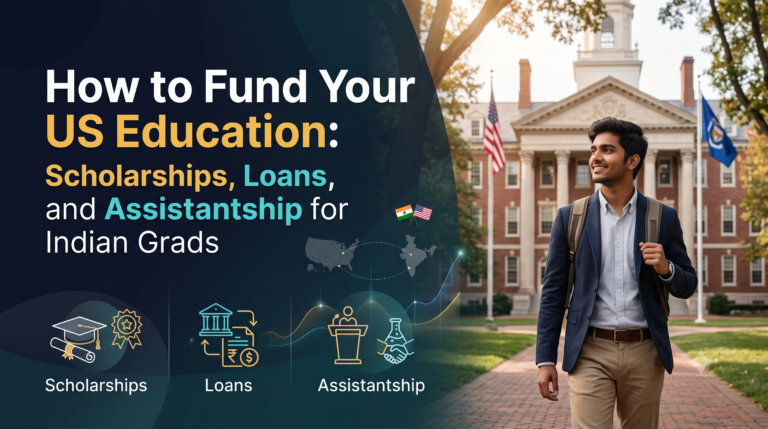
1. Merit scholarships from the university
Many universities give automatic or competitive merit awards based on your marks, test scores and profile. These can reduce tuition by US$2,000–$15,000 per year (₹1.92 lakh–₹14.4 lakh), and a few offer more. Applying early improves your chances because funds are limited.
2. Graduate assistantships (mostly for master’s and PhD students)
Teaching or research assistantships can provide a tuition waiver, a stipend, or both. Stipends often fall between US$15,000 and $30,000 per year (₹14.4 lakh–₹28.8 lakh). These are competitive and more common in research-heavy programs, especially at PhD level.
3. On-campus part-time work
F-1 students can generally work on campus for up to 20 hours per week during term and full-time during official breaks. Typical pay is around US$10–$16 per hour (₹960–₹1,536 per hour). If you work about 15 hours a week during term, that can add up to roughly US$4,000–$8,000 a year (₹3.84 lakh–₹7.68 lakh). It will not pay your full tuition, but it can cover a good part of your living expenses.
Important: Working off campus without proper authorisation is a serious violation of your visa. Please never accept “cash jobs” outside your permitted work rights, however common your friends say they are.
4. Education loans from India
Most Indian families in Punjab and Haryana fund US studies through a mix of savings, family support and an education loan. Public sector banks and NBFCs both offer loans for US universities, with and without collateral depending on the amount and the institution. A clear loan sanction letter also strengthens your visa file because it shows financial planning. Our team can guide you on documents and connect you with lenders at our Chandigarh office.
Sample first-year budget for a master’s student at a public university
| Expense | Amount in USD | Approx. Amount in INR (at ₹96/US$) |
| Tuition and fees | US$30,000 | ₹28,80,000 |
| Living costs (rent, food, transport) | US$14,000 | ₹13,44,000 |
| Health insurance | US$1,800 | ₹1,72,800 |
| US visa fee (US$185) + SEVIS fee (US$350) | US$535 | ₹51,360 |
| English/GRE tests and application fees | US$600 | ₹57,600 |
| Subtotal | US$46,935 | ₹45,05,760 |
| Return airfare and travel (paid in INR) | — | ₹1,00,000 |
| Estimated total for Year 1 | — | about ₹46,05,760 (roughly ₹46.1 lakh) |
This budget will look different at a cheaper university, in a smaller town, or at a private university. Rent alone can vary from US$500 per month in a small college town to more than US$1,800 in a big coastal city. If a total of around ₹46 lakh for the first year worries you, you are not alone. Please do not panic; talk it through with our team, because there are lower-cost routes, such as community college transfers and universities in affordable states.
Reason 5: A Diverse, Welcoming Environment and a Large Indian Community
This reason is emotional rather than financial, but it matters enormously, especially to parents who are worried about sending a child so far away.
You will not be alone
Most US universities have Indian student associations, Punjabi cultural clubs, Bhangra teams and Diwali and Baisakhi celebrations. Large Punjabi and Haryanvi communities live in California (Yuba City, Fresno, Bay Area), New York, New Jersey, Texas, Illinois and Washington State, and many gurdwaras and community groups welcome students. Finding vegetarian food, Indian groceries and familiar festivals is easy in most university towns.
Support systems for international students
Universities typically have international student offices, counselling centres, orientation programs, career services and writing support. Students who use these services early tend to settle in faster.
A truly global classroom
Your classmates will come from dozens of countries. This builds cultural awareness, communication skills and a global network, which are valuable whether you stay abroad or return home.
Safety and wellbeing: what we tell parents
The USA is a large country, and safety varies a lot by city and neighbourhood. Choosing a campus in a safe area, living close to campus, using university safety services and staying in touch with family regularly go a long way. Homesickness is common in the first semester. It usually eases as friendships form.
USA vs UK vs Canada vs Australia: How Do They Compare?
Many families compare countries before deciding. Here is a simple comparison based on what our visa experts see most often. Rules change frequently, so always check the latest official information.
| Factor | USA | UK | Canada | Australia |
| Typical master’s length | 1.5–2 years | 1 year | 1–2 years | 1.5–2 years |
| Post-study work | OPT 12 months; up to 36 months for STEM | Graduate Route (rules under review; verify current length) | Post-Graduation Work Permit, depending on program and institution | Temporary Graduate visa, depending on qualification |
| Course flexibility | Very high | Moderate | Moderate to high | Moderate |
| Overall cost level | Higher tuition at many universities; assistantships possible | Shorter degree can lower total cost | Generally moderate | Moderate to high |
| Best for | STEM, research, wide choice, big brands | Shorter, focused degrees | Students planning long-term settlement | Lifestyle and skilled-occupation pathways |
There is no single “best” country. The right choice depends on your course, budget, profile and long-term plan. If you are still deciding, our team can compare your options honestly, including options that do not involve the USA.
The Challenges: What We Want Every Family to Know
Because we care about your family’s trust more than a quick enrolment, we always share the tough parts too.
- High cost: Between tuition, rent and insurance, a master’s degree can cost ₹40–₹60 lakh or more in total. Loans need careful planning.
- Visa scrutiny: F-1 visa interviews are short and decisions can feel unpredictable. Officers look closely at your study plan, finances and ties to India. Consular officers may also review your online presence, so keep your social media honest and consistent with your application.
- Changing rules: Student visa, work permit and fee rules have changed several times in recent years. Always rely on official government sources and updated advice.
- Job market swings: Hiring in some sectors, particularly technology, goes through cycles. A strong internship record and networking matter a lot.
- Distance from family: A flight home costs money and takes over 20 hours. Plan for emotional support, not just financial support.
None of these mean you should not study in the USA. They mean you should go in prepared.
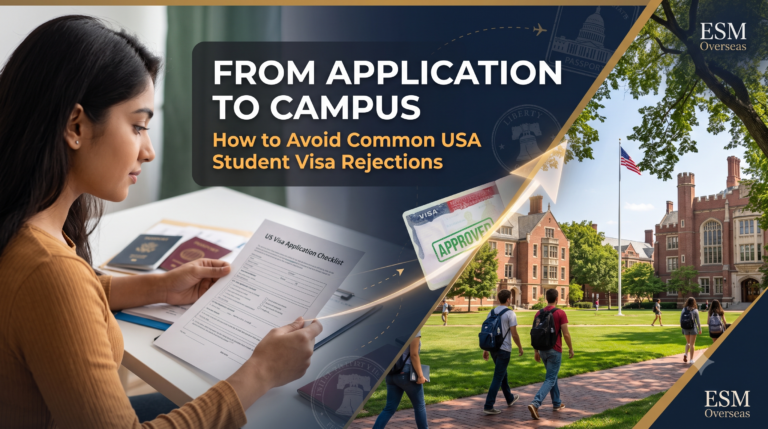
Step-by-Step: How to Apply for a US Study Visa (F-1)
Here is the process our team follows with students, from the first counselling session to departure.
- Shortlist courses and universities (10–12 months before the intake): Match your marks, budget and career goals. A balanced list has a few ambitious, a few realistic and a few safe options.
- Take required tests: IELTS (around ₹17,000–₹18,000 in India), TOEFL (about US$200, or ₹19,200) or Duolingo, and GRE (about US$220, or ₹21,120) where needed. Many universities are now test-optional, so check each one.
- Prepare documents and apply: Statement of Purpose (SOP), letters of recommendation, transcripts, resume and passport. Application fees are usually US$50–$100 per university (₹4,800–₹9,600).
- Receive your offer and pay the deposit: Admission decisions typically arrive in 3–8 weeks. Compare scholarships and total costs before accepting.
- Get your Form I-20: After you accept and show proof of funds, the university issues the I-20, generally within 1–3 weeks.
- Pay the SEVIS I-901 fee (US$350, or ₹33,600): Keep the receipt safely; you will need it at the interview.
- Complete the DS-160 form and pay the visa fee (US$185, or ₹17,760): Fill the form carefully; small mistakes can cause delays.
- Book and attend the visa interview: Appointment wait times vary by season and location, so check the official appointment portal. Most students receive a decision at or soon after the interview, and passports usually come back within about a week if approved.
- Pre-departure preparation: Book flights, arrange housing and insurance, and attend orientation sessions.
Realistic total timeline: From starting applications to holding a visa, most students take 5–8 months. Starting early, ideally around September–October for the next Fall intake, gives you breathing room.
You can read our detailed visa guidance page for document checklists, and if you would like to talk to someone about your specific profile, you can contact our team for a free consultation.
How to Choose the Right Program: Our Practical Tips
Here is what ESM Overseas’ visa experts recommend before you finalise your list:
- Check the STEM designation: If OPT extension matters to you, verify the program’s CIP code and the university’s official statement.
- Look at total cost, not only tuition: A cheaper university in an expensive city can cost more than a mid-priced one in an affordable town.
- Research employment outcomes: Ask the university for placement and internship data for your specific program.
- Avoid “guaranteed admission” and “guaranteed job” promises: No genuine consultant or university can promise these.
- Keep a backup: Apply to a mix of universities and consider another country as a second option.
- Prepare your interview story: Your visa officer wants to hear why this course, why this university, how you will pay, and what you plan to do afterwards.
Curious to explore country-specific options? Our Study in USA page explains the process in more detail.
Frequently Asked Questions
1. Is the USA a good choice for Indian students in 2026?
Yes, for many students it is, especially in STEM, business analytics, healthcare and research fields. But the cost is high and visa and work rules keep changing, so the decision should be based on your budget, course, and backup plans.
2. How much does it cost to study in the USA from India?
A typical first year for a master’s student costs about US$45,000–$50,000, which is roughly ₹43 lakh–₹48 lakh at ₹96 per dollar, including tuition, living costs, insurance and visa fees. Community colleges and affordable states can bring this down significantly.
3. Can I work while studying in the USA on an F-1 visa?
Yes, but only within limits. F-1 students can generally work on campus up to 20 hours per week during term. Off-campus work needs specific authorisation such as CPT or OPT. Working without approval can lead to visa cancellation.
4. What is OPT and how long can I stay after graduation?
OPT lets you work in your field after graduating. You typically get 12 months, and eligible STEM graduates can get an additional 24 months, for up to 36 months in total. It does not guarantee a long-term work visa.
5. How long does the US student visa process take?
Once you have your I-20, the visa steps usually take a few weeks, depending on interview appointment availability. From starting university applications to receiving a visa, planning for 5–8 months is realistic.
6. Do I need IELTS or TOEFL to study in the USA?
Most universities ask for an English test such as IELTS, TOEFL or Duolingo, although some waive it based on your Class 12 English marks or previous English-medium study. Always confirm this on each university’s admissions page.
7. Can I get a scholarship to study in the USA as an Indian student?
Yes. Merit scholarships, assistantships and department awards exist. Full scholarships are rare and competitive, but partial awards worth several lakh rupees per year are common for strong profiles that apply early.
8. Can I take my family with me while I study?
Spouses and children of F-1 students can apply for F-2 dependent visas, but F-2 holders generally cannot work. This affects household finances, so discuss it with a visa expert before deciding.
Ready to Talk? Let Us Help You Plan, With No Pressure
Choosing where to study is one of the biggest decisions your family will ever make, and it should never be rushed. Whether you are just starting to think about the USA or you already have an offer letter and doubts about your visa, we are happy to give you honest, practical guidance.
Book a free 15-minute consultation with ESM Overseas’ visa experts. We will look at your profile, budget and goals, and tell you plainly whether the USA is a good fit or whether another country makes more sense. There is no obligation and no pressure to sign up.
- Call or WhatsApp: +91-7087217801
- Visit us: ESM Overseas, SCO 375-376, Sector 35B, Chandigarh
- Online: Book your free consultation here
Parents are always welcome to join the conversation. We know that a decision like this is a family decision, and we are glad to answer every question.
Disclaimer: This article is for general guidance only. Exchange rates (US$1 = ₹96 used here), fees, tuition, visa policies and work rules change often. Please verify current details with the university, the US Department of State and USCIS before making financial or application decisions.